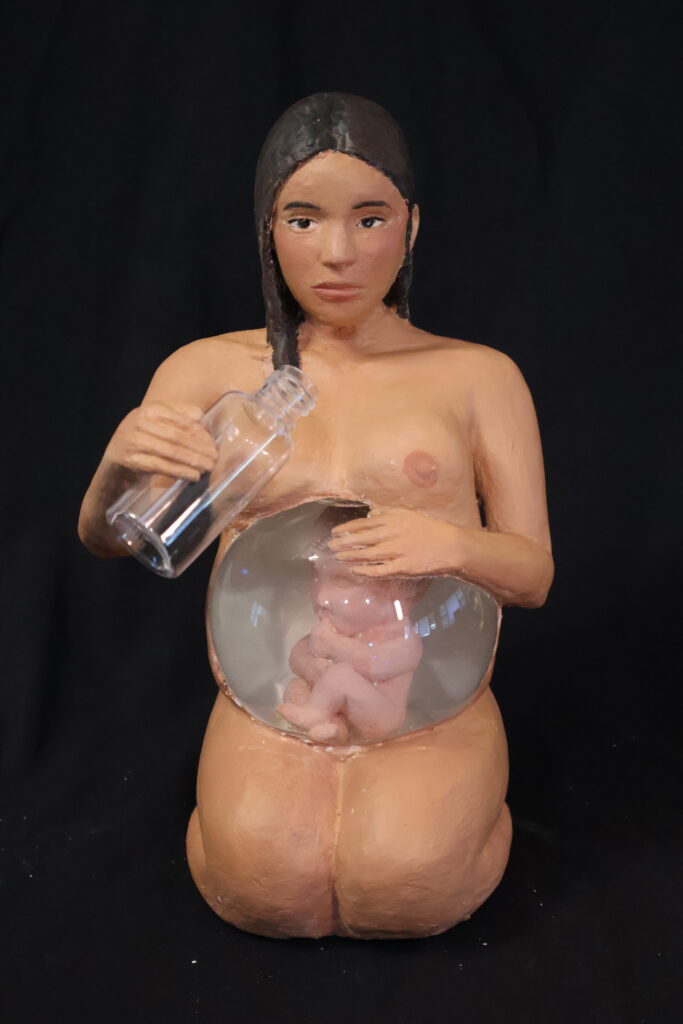
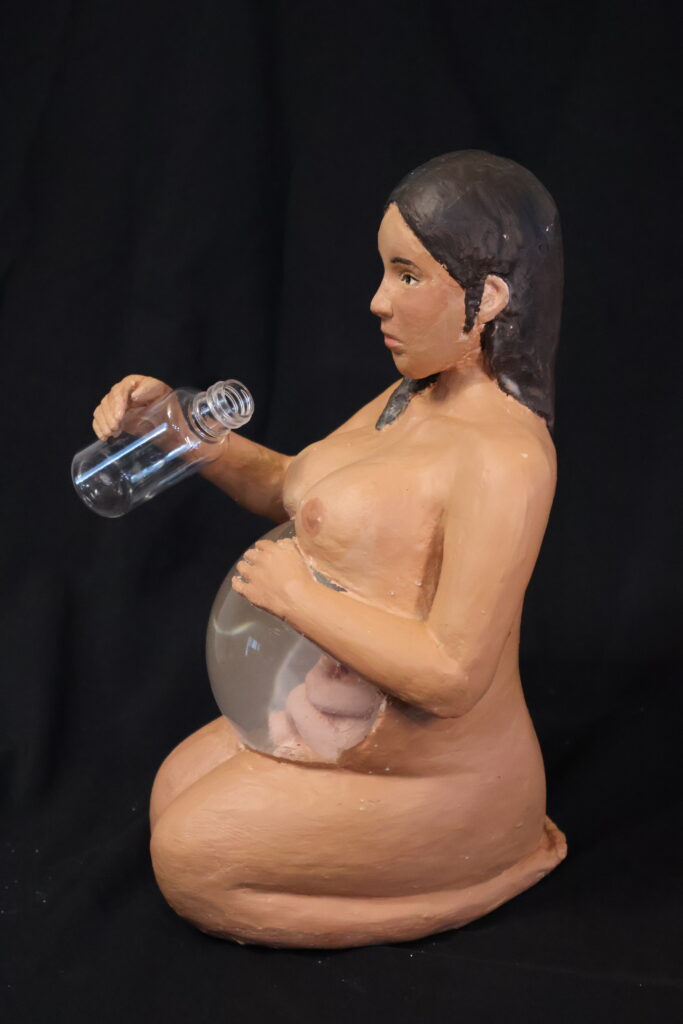
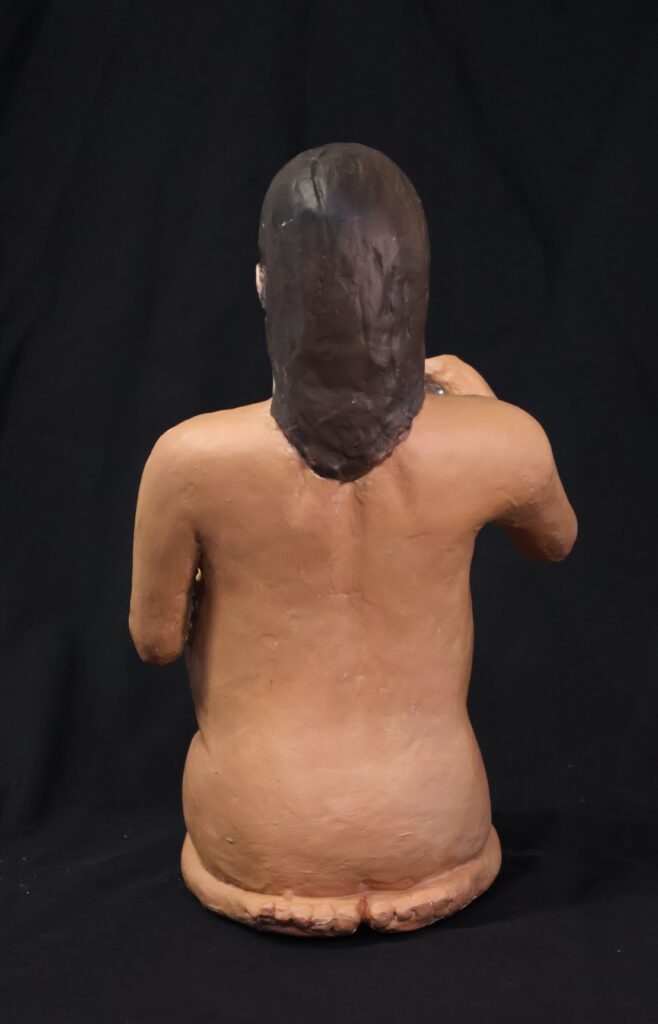
Within

National Silver Medal,
Scholastic Art & Writing 2026Honorarium Award (Group winner; $1000)
Creative Change Makers, New Jersey State Teen Arts Festival | 2026Invited iCreate Exhibition at the Bruice Museum
Theme: How does the accumulation of pollution in ecosystems return to our table? Where does pollution accumulated in ecosystems ultimately end?
The Hackensack River in New Jersey was designated as a Superfund Site due to heavy contamination with strict advisories against the consumption of marine life caught. This local reality reflects a broader crisis of water contamination. In the ocean, plastic pollution has been an emerging concern as plastics break down into microplastics and contaminate the ocean. These particles move through the marine food chain and eventually reach humans through the consumption of seafood, especially fish. As a result, foods that appear clean and healthy often contain invisible traces of plastic, which we unknowingly consume. Recent studies suggest that microplastics may contribute to inflammation, cellular damage, oxidative stress, disruptions to the gut microbiome, cardiovascular and metabolic disorders, reproductive issues, and even cancer.
Referance
Ragusa, A., Notarstefano, V., Svelato, A., Belloni, A., Gioacchini, G., Blondeel, C., Zucchelli, E., De Luca, C., D’Avino, S., Gulotta, A., Carnevali, O., & Giorgini, E. (2022). Raman Microspectroscopy Detection and Characterisation of Microplastics in Human Breast Milk. Polymers, 14(13), 2700. https://doi.org/10.3390/polym14132700
Nur Sakinah Roslan, Yeong Yeh Lee, Yusof Shuaib Ibrahim, Sabiqah Tuan Anuar, Ku, Lisa Ann Lai, & Brentnall, T. (2024). Detection of microplastics in human tissues and organs: A scoping review. Journal of Global Health, 14. https://doi.org/10.7189/jogh.14.04179
